Search behavior continues to change in 2026. According to recent reports in the industry, it has been indicated that over 93 percent of online experiences start with a search engine. Organic visibility is now reported to be the source of their best quality leads by about 68 percent of marketers.
Meanwhile, search engines are running billions of search queries daily and updates to the algorithms are more common than they have ever been. The idea behind these updates is to prioritize useful content and eliminate the use of manipulative behavior on the results pages.
Some businesses attempt to use shortcuts rather than sustainable strategies as competition in ranking increases. This is where the argument about black hat SEO services starts.
The term is heard by many companies, yet its meaning and the way it can hurt long term growth are not well understood. This guide makes the concept understandable, discusses popular methods, points out the risks, and provides useful examples to make sure that businesses make the right choices.
What Does Black Hat SEO Mean?
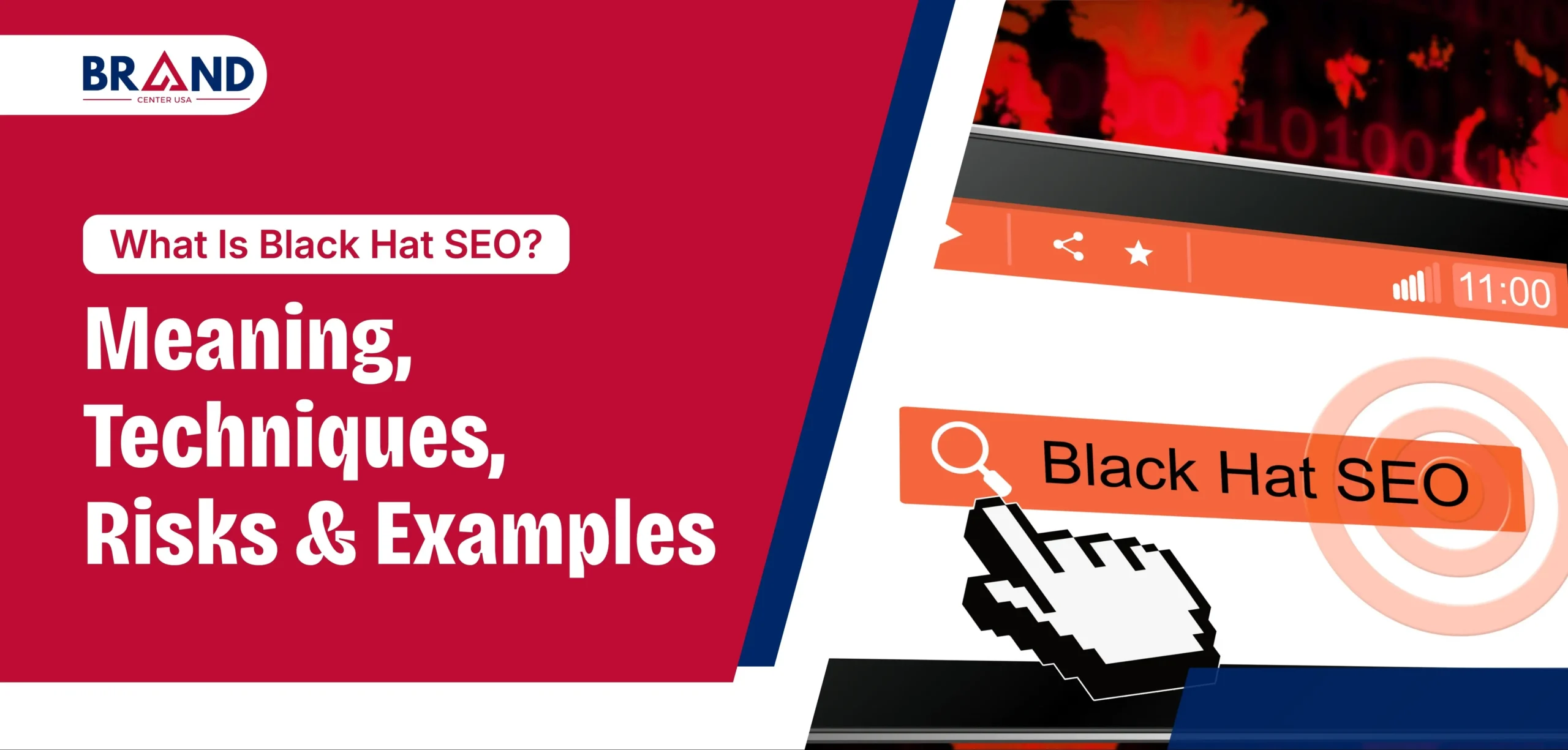
Black Hat SEO is a set of strategies aimed at trying to alter search engines ranking instead of achieving it organically. The approaches emphasize the use of algorithm loopholes rather than value addition to users. The idea is rapid exposure, which is usually through the violation of search engine rules. Although the results might seem quick, they are seldom sustainable.
Google and other search engines spend a lot of money in identifying artificial optimization. The current algorithms consider user behavior, content quality, credibility cues, and technical performance as a combination.
When websites are based on fraudulent practices, they send signals to search engines to consider them spam. With the increased detection every year, more dangerous strategies are easy to detect and punish.
Why Businesses Get Tempted?
A lot of brands are under pressure to rank. New websites are in need of traffic quickly and established businesses worry that they may lose visibility to the competitors. The idea of short term ranking can sound appealing when the growth goals are a pressing concern.
The agencies that encourage aggressive optimization have a tendency to focus more on short-term profits rather than long-lasting success.
Lack of awareness is another factor that makes businesses consider these methods. The decision makers might be unaware of the functionality of the search engines.
They can presume that all optimization strategies are the same. In the absence of this guidance, businesses can blindly invest in strategies that adversely affect reputation, traffic and revenue in the long run.
Common Black Hat SEO Techniques
Keywords stuffing is one of the most popular tricks. This is the repetition of search phrases in excess in the content. The text is unnatural and hard to read instead of being easier to read. Language flow and semantic relevance are now considered as search engines and thus the abuse of keywords is easily identified.
Cloaking and hidden text are still frequently used methods. Hidden text refers to inserting the keywords in the manner in which they are not visible to the user but are visible to the search engines.
Cloaking displays other content to search engines than to visitors. The two strategies are focused on faking rankings without providing value. These approaches are becoming less effective, as modern algorithms compare user experience signals.
Link Manipulation Practices
Backlinks are significant in respect to authority ranking. Nevertheless, there are websites that are trying to spur growth by means of artificial link schemes. Bought links, PBNs, and automated directory submissions aim to fake popularity rather than gain trust naturally.
Search engines evaluate the link patterns. Unexpected bursts of poor quality links or unrelated sites sound warning bells. In cases where it is evident that the websites are being manipulated, they can either be penalized manually or suppressed by the algorithms. The recovery can be a lengthy process, involving cleaning and time.
Content Automation and Duplicate Pages
Automated content generation has grown with advances in technology. Some marketers produce thousands of low quality pages using automation tools. These pages usually offer little originality or insight. They exist only to capture traffic rather than help readers solve problems.
Duplicate content also creates major issues. Copying material from other websites or publishing near identical pages confuses search engines. Algorithms prefer unique information that adds value to users. Sites filled with repetitive content lose credibility and often experience declining rankings over time.
Real World Examples of Risk
The example of an online shop which quickly accumulates backlinks via paid networks. Rankings can increase in weeks. There is a temporary increase in traffic and sales seem good. Search engines determine unnatural link patterns after a significant update of the algorithm. The site becomes invisible in virtually no time. It can take months or years to recuperate.
Other ones include blogs that are posting automatic articles on hundreds of keywords. The first indexing is done to give the illusions of growth.
After a short time, the level of engagement decreases as people do not perceive much useful data. Poor user experience signals result in search engines de-ranking the site and the site has little organic traffic.
The Hidden Risks Behind Quick Results
Loss of trust is the greatest risk of Black Hat SEO services. The aim of search engines is to guard users against misleading results. Any site that contravenes rules will be punished by lowering or even eliminating pages in search results. Traffic is instantaneously impacted, as well as leads and revenue streams.
There is also loss of brand reputation. The end-users demand high-quality information and professional virtual experiences. Whenever visitors come across spammy pages or deceptive information, they lose trust in the brand. Regaining trust cannot happen quickly as it needs to be done consistently, with high-quality content, and ethical optimization practices in the long run.
Ethical SEO as a Long Term Strategy
Sustainable optimization is user value-oriented. Ethical SEO generates authority with the help of informative content, technical performance and authentic interactions. Successful brands put money in skills, relevance, and understanding the audience rather than in chasing loopholes in algorithms.
The current SEO incorporates quality of the content, mobile user friendly, speed of the page and good user experience. Companies that focus on these factors enjoy constant positions and consistent growth. The future changes in algorithms also coincide with ethical practices, and it minimizes risk and guarantees long term visibility.
How to Identify Risky SEO Providers?
Companies ought to be selective of SEO partners. Guaranteed first page or promises of instant rankings will be an indicator of aggressive tactics. Transparent reporting, realistic timelines, and clear explanations of strategy indicate a trustworthy provider.
An effective agency is geared towards quantifiable growth as opposed to short cuts. They describe the role played by content in enhancing user experience and optimization in aiding business objectives. Effective communication assists clients to grasp every stage, avoiding misunderstanding and negative brand reputation due to bad practice.
Building Sustainable Growth in 2026
Search engines now prioritize experience driven signals more than ever before. Metrics such as engagement time, content relevance, and technical reliability influence ranking decisions. Companies that align with these expectations create strong digital foundations that support growth across multiple channels.
The future of SEO rewards consistency. Brands that publish helpful information, maintain technical health, and engage audiences authentically see lasting success. Sustainable strategies may require patience, but they create predictable outcomes and stronger online authority compared to risky shortcuts.
The Bottom Line
Black Hat SEO promises fast results but introduces serious long term risks. Manipulative tactics may produce temporary gains, yet penalties, traffic loss, and damaged credibility often follow. Businesses that choose ethical optimization protect both visibility and brand reputation while building dependable growth.
Brand Center USA helps businesses move beyond risky experimentation and toward reliable digital success. The focus stays on proven strategies that strengthen authority, improve user experience, and deliver measurable performance.
Choosing the right SEO partner ensures sustainable rankings, stronger engagement, and lasting online impact that supports business goals well into the future.
Frequently Asked Questions
1. What are Black Hat SEO services?
Black Hat SEO services refer to optimization practices that attempt to manipulate search engine rankings by violating search engine guidelines. These methods focus on quick ranking improvements instead of long term value. While results may appear fast, they often lead to penalties that reduce visibility and traffic.
2. Why do some businesses still use Black Hat SEO techniques?
Some businesses choose these techniques because they promise fast results and rapid traffic growth. Companies under pressure to rank quickly may fall for unrealistic guarantees. In many cases, decision makers are unaware of the risks involved or do not fully understand how search engine algorithms evaluate websites.
3. Can a website recover after using Black Hat SEO practices?
Yes, recovery is possible but it requires time and consistent effort. A website must remove harmful backlinks, improve content quality, and follow ethical optimization standards. Search engines need to regain trust before rankings improve again, which can take several months depending on the severity of penalties.
4. How can businesses identify if an SEO strategy is risky?
Warning signs include guaranteed rankings, extremely fast results, lack of transparency, and unclear reporting methods. Ethical SEO providers explain their strategy clearly and focus on user experience, quality content, and technical improvements rather than shortcuts or manipulation.
5. What is the safer alternative to Black Hat SEO services?
The safer approach is ethical SEO that prioritizes helpful content, strong website performance, and genuine audience engagement. Sustainable optimization builds authority gradually and protects brands from penalties. This approach delivers steady traffic growth and long term online success.