Quick Answer
OpenAI launched ChatGPT Ads as a US pilot on February 9, 2026, for logged-in adult users on the Free and ChatGPT Go tiers, then opened a self-serve Ads Manager on May 5, 2026, removing the original minimum spend requirement. By August 2026, ads had expanded to more than 40 countries including the UK, Mexico, Brazil, Japan, and South Korea.
Ads appear as clearly labeled ‘Sponsored’ units separate from organic answers and are targeted using conversation context rather than third-party tracking. Paid tiers (Plus, Pro, Business, Enterprise, Education) remain ad-free. This shift signals that AI search is becoming a genuine advertising channel, making SEO, AEO, and GEO fundamentals more important than ever for organic visibility.
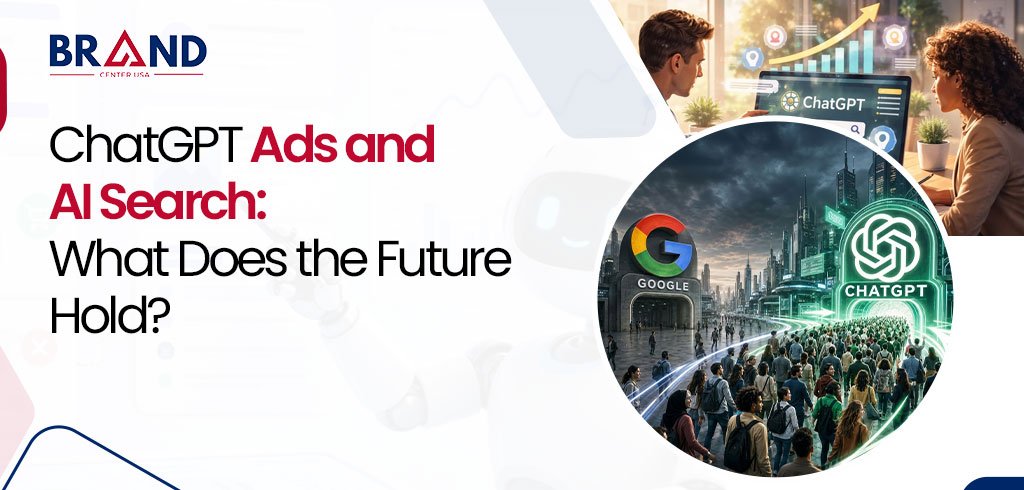
For most of its existence, ChatGPT operated purely on subscriptions and free access, with no advertising layer at all. That changed in 2026. OpenAI has now built, tested, and scaled an advertising business inside the world’s most-used AI assistant, and the implications reach far beyond paid media budgets.
Every business that depends on search visibility, from local service providers to national e-commerce brands, needs to understand how ChatGPT Ads work, how they interact with organic AI answers, and what this means for the future of discovery.
With more than four decades of combined search marketing experience across our team, we have watched search evolve from ten blue links to answer engines, and this is one of the more consequential shifts we have tracked.
The Rollout Timeline: How We Got Here
ChatGPT Ads did not appear overnight. OpenAI moved through a deliberate, staged rollout, and understanding the sequence helps explain where the platform is headed next.
| Date (2026) | Milestone |
|---|---|
| Jan 16 | OpenAI confirms it will begin testing ads for logged-in adult (18+) users in the US |
| Feb 9 | Official pilot launch of ChatGPT Ads for Free and ChatGPT Go tier users in the US |
| May 5 | Self-serve Ads Manager opens; the original minimum spend requirement is removed |
| Jul 22 | “Advertise in ChatGPT” platform opens broadly; early advertisers include major retail brands |
| Aug 11 | Ads expand to the UK, Mexico, Brazil, Japan, and South Korea |
| Aug 21 | Ads Manager available across nine markets, with 31 European countries listed as “coming soon” |
What stands out is the pace. OpenAI compressed a rollout that typically takes platforms several years into roughly six months, moving from a closed pilot to a nine-market self-serve platform with automated bidding options including CPC, CPM, and oCPC.
How ChatGPT Ads Actually Work
Placement and Format
Unlike a traditional search engine results page, ChatGPT does not interleave ads into the middle of a generated answer. Ads appear as a distinct, clearly labeled block beneath the organic response, visually separated through its own styling. By March 2026, this had expanded from a single sponsored unit into three formats: sponsored answer cards, product spotlight units, and contextual sidebar placements, giving advertisers more surface area while preserving a visible line between organic answers and paid content.
Targeting Logic
OpenAI has been explicit that ChatGPT Ads are matched using the topic of the current conversation, a user’s past chats and memory, and prior ad interactions, not third-party, cross-web tracking. Advertisers do not receive raw chat content, which OpenAI positions as a trust-preserving alternative to the behavioral tracking model that has defined web advertising for two decades.
Who Sees Ads
OpenAI told Yahoo Tech that it does not guarantee a fixed level of visibility for any individual site and confirmed that ChatGPT still cites Reddit in some capacity.
- Logged-in adult users (18+) on the Free and ChatGPT Go tiers in supported markets
- Users OpenAI does not predict to be under 18 are excluded from ad delivery entirely
- Plus, Pro, Business, Enterprise, and Education subscribers remain fully ad-free
Where the Ad Dollars Are Concentrating
Independent tracking from OtterlyAI found that 76.4% of shopping-related questions posed to ChatGPT now return a sponsored placement, by far the highest-intent category and a strong indicator that OpenAI is prioritizing commercial inventory around purchase-ready queries first.
Reporting also indicates OpenAI’s own revenue projections assume a substantial share of growth will come from shopping and advertising-related features, with major agency partners including Dentsu, Omnicom, and Publicis already running campaigns for well-known retail brands.
ChatGPT Ads vs. Google AI Overviews: A Side-by-Side Comparison
| Factor | ChatGPT Ads | Google AI Overviews / AI Mode |
|---|---|---|
| Ad format | Labeled sponsored block below the answer | Sponsored results blended within the broader search experience |
| Targeting basis | Conversation context, memory, past ad interactions | Search intent, historical query and behavioral data |
| Eligible audience | Free and Go tier logged-in adults | All Google Search users |
| Organic influence | OpenAI states ads never influence the underlying answer | AI Overviews summarize organic content separately from ads |
| Rollout stage (2026) | Expanding. 9+ advertiser markets, growing fast | Mature ad infrastructure layered onto a new AI summary format |
What This Means for the Future of AI Search
The introduction of advertising fundamentally changes what ChatGPT is: no longer a purely conversational research tool, but a commercial discovery platform competing directly with Google Search and Google Shopping. Several trends are worth watching closely:
- Sponsored answers will keep expanding into product-led and comparison queries, mirroring the evolution of Google Shopping ads.
- Organic AEO and GEO visibility will become more valuable, not less, since brands that already appear as trusted, cited sources have a natural advantage when sponsored placements sit alongside them.
- Entity-level trust signals, consistent NAP data, authoritative backlinks, structured data, and expert authorship, will matter across both paid and organic AI placements.
- Multi-platform strategy is now essential: brands need visibility across Google Search, Google AI Overviews, ChatGPT organic citations, and ChatGPT Ads simultaneously.
The Bottom Line
ChatGPT Ads mark the beginning of a new advertising economy inside AI search, one that is scaling faster than any previous platform rollout in digital marketing history.
But the fundamentals have not changed: the businesses that will win in this new landscape are the ones with strong organic authority, technically sound websites, and content that answer engines trust enough to cite.
Paid placements can amplify visibility, but they cannot replace the credibility that comes from genuine expertise, accurate information, and consistent optimization across SEO, AEO, and GEO.
Get Ready for the Next Era of AI Search Marketing
Brand Center USA helps brands prepare for the shift toward AI-driven search and advertising with expert SEO, AEO, and GEO strategies built for Google AI Overviews, ChatGPT, and beyond.
Visit Brand Center USA to Speak With Our Strategists
Frequently Asked Questions
Q1. When did ChatGPT Ads officially launch?
OpenAI launched the ChatGPT Ads pilot on February 9, 2026, for logged-in adult users on the Free and ChatGPT Go tiers in the United States, then opened a self-serve Ads Manager on May 5, 2026.
Q2. Do ChatGPT Ads affect the accuracy of AI answers?
OpenAI states that ads are displayed as a separate, clearly labeled block beneath the organic answer and do not influence the content of the underlying response.
Q3. Which ChatGPT users see ads?
Ads are shown only to logged-in adult users (18+) on the Free and ChatGPT Go tiers. Plus, Pro, Business, Enterprise, and Education subscribers do not see ads.
Q4. How are ChatGPT Ads targeted?
Targeting is based on the topic of the current conversation, a user’s past chats and memory, and previous ad interactions, not third-party, cross-web tracking data.
Q5. Which countries currently support ChatGPT Ads?
As of August 2026, the Ads Manager is available in the United States, United Kingdom, Canada, Australia, New Zealand, Japan, Korea, Brazil, and Mexico, with expansion into 31 European markets planned.
Q6. How should businesses prepare for the future of AI search advertising?
By strengthening organic SEO, AEO, and GEO visibility first, since trusted, well-optimized brands benefit most whether they choose to run ChatGPT Ads or rely purely on organic AI citations.